

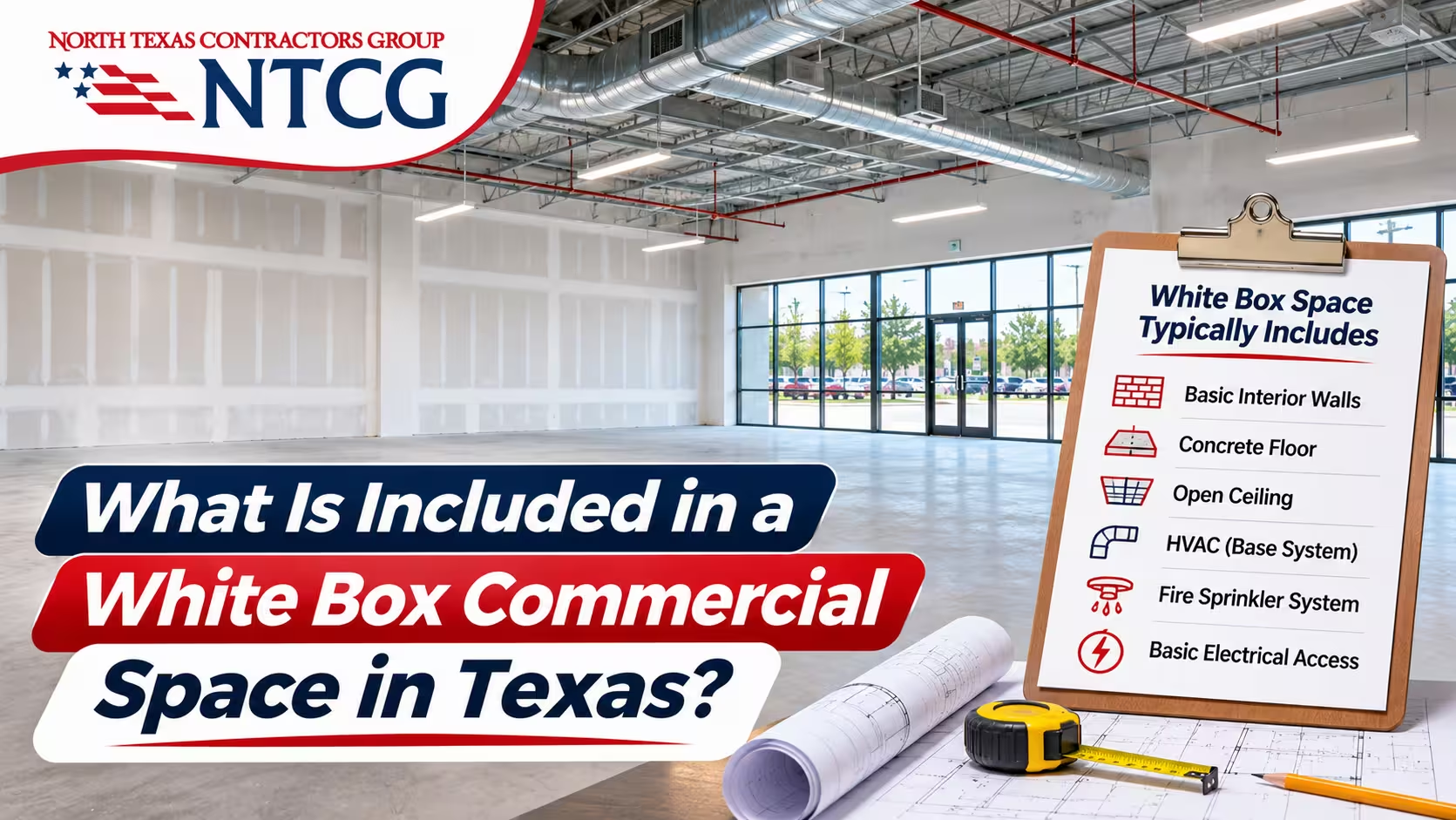
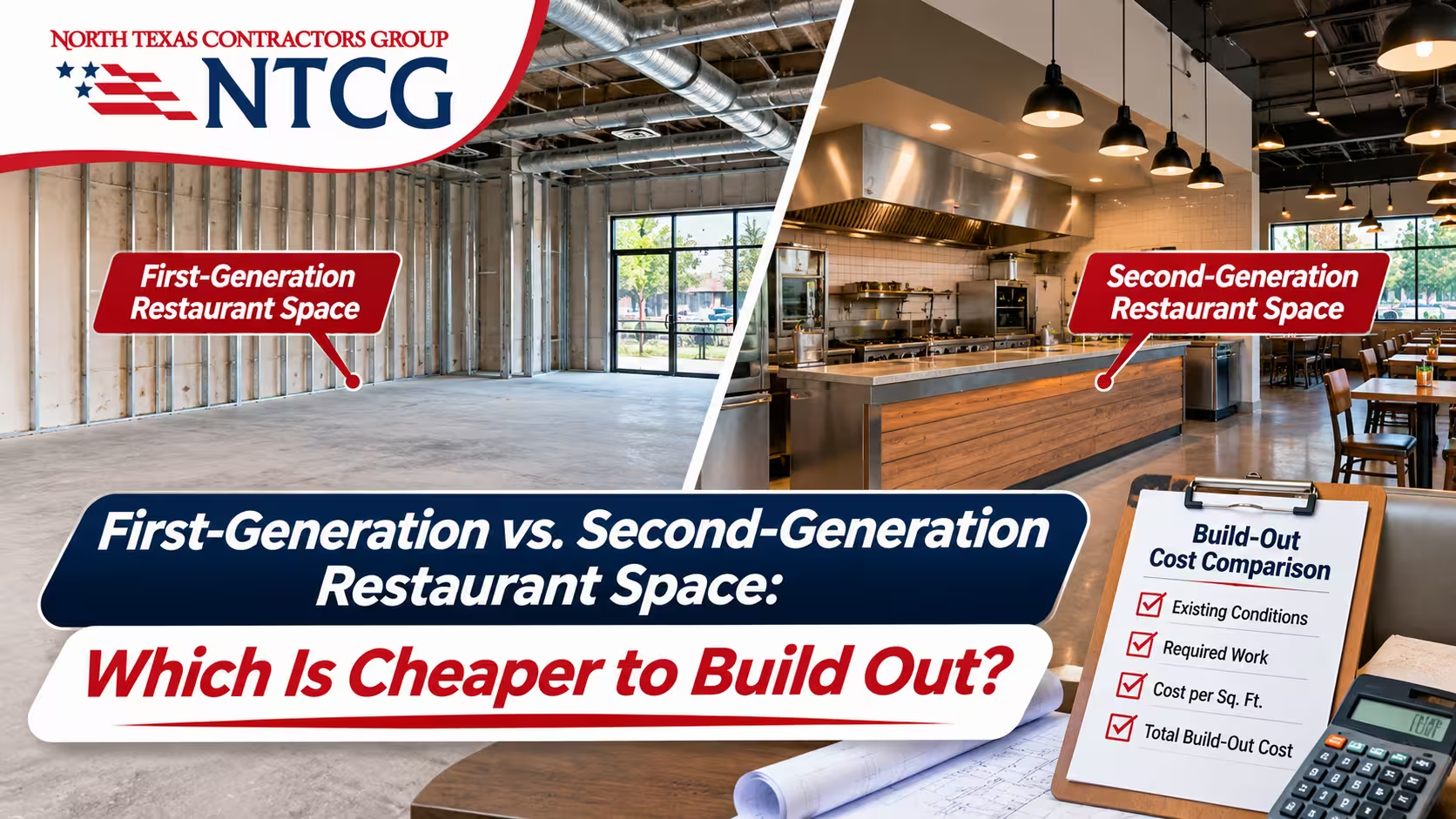

A white box commercial space usually comes with finished walls and a ceiling, basic lighting, and working HVAC and electrical service. Many units also include a restroom. What you actually get depends on four things: the property’s condition, the landlord’s delivery agreement, the written construction scope, and your lease terms. With white box construction in Texas, tenants often lose money by assuming instead of checking. Confirm the delivery condition before you hire a designer or order equipment. That way you’ll know exactly what the landlord hands over and what work is still on you.
What Does a White Box Mean in Commercial Construction?
A white box is a commercial unit that the landlord has taken past raw shell condition to a plain, neutral finish. The essential building systems work, and the walls are closed up, so you start customizing instead of building every piece from scratch. That box sits inside your demised premises, the lease term for the exact area you’re renting.
Here’s the catch with the label. Landlords don’t all follow one standard definition of “white box,” so landlord delivery can look very different from one building to the next. One property might hand over painted walls and a newer rooftop unit, while another delivers bare drywall and an aging system. Your lease and written construction scope are what count, so read them before you trust the label.
What Is Typically Included in a White Box Commercial Space?
Most white box deliveries cover basic finishes and the core building systems, but the details shift from one property to the next. Walk the space with the scope in hand and check each item below.
Finished Walls, Ceilings, and Basic Flooring
Expect demising walls between your unit and the neighbors, usually finished in drywall. In many deliveries, the landlord’s crew tapes, finishes, and paints that drywall in a neutral color. Overhead, you’ll often find a suspended ceiling grid, though some landlords agree to a different ceiling treatment.
Flooring catches more tenants off guard than anything else. A white box floor is frequently a prepared or sealed concrete slab, not the finished flooring you’ll pick later. Check every surface yourself, because “painted” can mean one coat of primer.
Basic HVAC and Climate Control
Basic HVAC usually means the landlord has installed heating and cooling equipment with some ductwork and supply grilles. Many deliveries include a thermostat and standard controls, though not all. Turn the system on during your walkthrough and make sure it runs.
Working equipment isn’t always the right equipment for your business. A unit sized for a quiet office may struggle in a packed gym or a salon full of hair dryers. Restaurants and medical offices often need extra capacity or exhaust, and that mechanical work usually falls to the tenant.
Electrical Rough-In and Basic Lighting
The landlord typically brings electrical service into the space and sets a panel with basic distribution. Electrical rough-in may include wiring and boxes at standard spots along the walls. Lighting is usually simple fixtures in the ceiling grid that give you general overhead light.
Anything past that tends to land on you. Specialty lighting, extra outlets, equipment circuits, and data cabling are common tenant items. If you run heavy equipment, ask what the panel can carry before you sign.
Restrooms, Plumbing, and Life-Safety Provisions
Many white box spaces include restroom construction, often one or two accessible restrooms with toilets and sinks already set. Other units only have plumbing stubbed in, which leaves the fixtures to the tenant. Find out which version you’re getting before you budget.
Life-safety items like fire sprinklers, emergency lighting, and exit signs may be part of the base scope. Check that these MEP systems match your intended use and the requirements that apply to it. A layout that works for retail may need changes before it can serve a clinic.
What Is Usually Left Unfinished for the Tenant?
A white box gives you a clean starting point, not a working business. You’re getting an unfinished commercial unit with the basics in place, and the tenant improvement work that makes it yours usually comes next. These items often stay on the tenant’s side of the line:
- Interior partitions, private offices, and room layouts
- Decorative flooring and specialty wall finishes
- Custom lighting and added electrical circuits
- Extra plumbing for specialized operations
- Reception counters, cabinetry, and millwork
- Signage, branding, and decorative features
- Data cabling, security systems, and equipment hookups
None of this is set in stone. Some landlords will build interior partitions or put down flooring to land a tenant faster. Your lease and the landlord’s delivery obligations decide where the line actually falls, so get that line on paper.
How Is a White Box Different From a Gray Shell, Vanilla Box, or Turnkey Space?
These labels describe rough levels of completion, but landlords and contractors use them loosely, so two people can mean different things by the same word. Use this table as a general guide only.
| Space Condition | Typical Delivery Condition |
| Gray shell | More basic interior condition, often with exposed structural elements and utility connections or rough-ins. |
| White box | Basic interior finishes and essential building systems, with tenant-specific work still required. |
| Vanilla box | Often similar to a white box, but the precise level of completion varies by landlord and lease. |
| Turnkey space | More extensively finished and customized, potentially ready for the tenant’s intended operations after required approvals. |
Treat those rows as rough markers, not fixed technical definitions. A gray shell commercial space generally needs a bigger commercial shell finish-out, sometimes walls and ceilings plus full system distribution. A white box sits in the middle, between that rough shell and a turnkey space finished for a specific operation. Vanilla box construction usually means about the same thing as white box, though some landlords use it for a slightly different finish level. Compare the actual construction specs, because two spaces with the same label can leave you with very different amounts of work.
What Should Tenants Confirm Before Accepting a White Box Space in Texas?
Get the delivery condition in writing before you take the keys. A short checklist that both commercial landlord and tenant sign heads off most arguments about what was promised. Confirm these points:
- Which walls, ceilings, and floor surfaces will be finished?
- Whether the HVAC is installed, running, and suited to your intended use
- What electrical service and panels come with the space, plus outlets and lighting?
- Which restroom fixtures, plumbing connections, and utility services are included?
- Who pulls permits, schedules inspections, and finishes any open construction work?
- The agreed completion condition and who fixes incomplete items after delivery
- How the lease spells out the landlord’s delivery obligations and construction specs
Don’t assume the white box label gets you a Certificate of Occupancy. Approval to open for your specific use depends on the local jurisdiction, the building’s condition, and your occupancy type. Talk to the city or a qualified professional before you set an opening date.
What Affects White Box Buildout Cost and Who Pays for It?
The white box buildout cost comes down to what’s already in the space and what your lease says. The size of the unit matters, and so do the age and condition of its building systems. A unit with working HVAC, electrical, plumbing, and restrooms costs far less to finish than one missing them. The level of interior finish in the landlord’s scope moves the number too.
Payment usually splits along that scope line. Landlords often complete the agreed white box work before delivery, and tenants often pay for customization beyond it. A tenant improvement allowance or another negotiated agreement can shift that balance. Neither setup is guaranteed, so get the split written into the lease.
Frequently Asked Questions
What Is Included in a White Box Commercial Space?
Usually, you get finished walls and a ceiling, basic HVAC and electrical service, standard lighting, and often restrooms. Your lease and the delivery scope decide the actual list.
How Much Does White Box Construction Cost in Texas?
No single number fits every project. Cost depends on the property’s existing condition and the size of the space, plus the building systems it needs and the agreed construction scope.
What Is the Difference Between White Box and Gray Shell Construction?
A gray shell typically has fewer finished interior elements and fewer working systems. A white box usually adds basic finishes and operational building systems. Landlords define both terms their own way, so check the specs.
Can a Business Open Immediately After Receiving a White Box Space?
Not necessarily. You may still need tenant improvements, permits, inspections, and occupancy approval before you can open your doors.
Who Pays for White Box Improvements, the Landlord or the Tenant?
It depends on the lease. Landlords often pay for the agreed base improvements, while tenants typically cover customization beyond it.
Final Thoughts
Know exactly what condition your space arrives in before you sign a lease or plan a finish-out. The white box label won’t tell you that by itself. Pull the written scope, walk the unit, and list every item still left to build. North Texas Contractors Group handles commercial remodeling, white box preparation, and commercial finish-outs across the Dallas-Fort Worth area. Tenants and property owners planning a project can contact their team for a free estimate on the work their space still needs.